Showing posts with label geology. Show all posts

Tuesday, September 18, 2012

Succulents and Cacti, never too many.


So, I recently acquired some more little succulents and cacti, and I was so displeased to be forced to find yet
another home for them...and even more upset to have to throw up some curtains and hang some pictures to
dress their new home. (Obviously I am being completely facetious, decorating for succulents is a heavenly treat...)


Wednesday, April 18, 2012

crystalline


I picked up some wonderful rocks at the estate sale on Sunday. Yep, I'm a sucker for rocks. Big time. Just ask the sisters. I have boxes of rocks hidden all over Mom's house. You're welcome, Mother. Anyway, I cleaned my lovelies because you never know what sort of basement boxes these might have been in--they could have functioned as doorways for mouse houses! And as cute as that would be--oh, it would be cute--I'm going to say no thank you.


For most rocks, dish soap, warm water, and an old toothbrush will work just fine. That's what I used here. But if you're handling something delicate (as in, a bit crumbly), be sure to use care. Quartz is pretty hard, so I wasn't really concerned that I was going to chunk a piece off. And often, when you're cleaning crystal clusters, like this one, some of the crystals might detach. Nothing to worry too much about--I lost one tiny crystal to my vigorous scrubbing--just be aware that it's a possibility. And before you use something stronger than dish soap (like hydrogen peroxide or oxalic acid), make damn sure you know what type of rock you're dealing with. You don't want your precious find to end up dissolving right before your eyes. That would be a minor tragedy. Worse than dropping an egg sandwich.


Now, you may be looking at these pictures and thinking, Hold the phone. You said you cleaned these? Because I still see dirt. Well, you're sort of right. The dark stuff that looks like plain old dirt (Is there such a thing as plain old dirt? Not according to Science!) is actually mineral deposits, probably a manganese oxide here. And you wouldn't want to wash that away, right? I mean, it's part of your rock's heritage. And really, you'd find it fairly difficult to get rid of these minerals with soap, water, and manual toothbrush action alone. You'd need to make a foray into serious rock cleaning. 


Most of the shiny perfect crystals you find in mineral shops have been professionally cleaned and cut to appeal to buyers. Crystals in their natural state are often considered less desirable. Ugh, giant frown over this fact. Not that I don't love shiny perfect crystals--I just don't love imperfect natural crystal less. But if you really want shiny perfect crystals, you can get there with a bit of work. Bob's Rock Shop has a good guide to cleaning minerals and a breakdown of how to procure the tools you'll require. Yes, you'll need tools, like acid, safety gloves, and dental picks. Fun!


Whether you're seeking geologic specimens in someone's basement or out in the field, happy hunting! 


Friday, January 6, 2012

DIY: Plate Tectonics Cards

It's Volcano Day...

So, if you are anything like us sisters, you love all things paper--especially if they have to do with some old school correspondence (letter writing and such). But if you are specifically like me, you find that you just don't follow through, for instance my Christmas/New Years cards just went in the mail today. So when I send out something I try to actually put a little love, blood, and time into it...

Thursday, January 5, 2012

mountaineer

Tectonic from Guy Laramee's Biblios series

OK, my book nerd ears perk up like whoa when I hear tell of jaw-dropping book sculpture. And Guy Laramee has
jaw-dropping book sculpture in spades. I feel like I'm peering in a secret world. Totally epic and immense and moody.
I adore it. And the way lighting is used in these sculptures is just phenomenal, wouldn't you agree?

detail from The Grand Library

book people from the Biblios series

jades from The Great Wall series

historia das americas (2009), from The Great Wall series

Here's what Laramee has to say about his work:

"I carve landscapes out of books and I paint Romantic landscapes. Mountains of disused knowledge return to what they really are: mountains. They erode a bit more and they become hills. Then they flatten and become fields where apparently nothing is happening. Piles of obsolete encyclopedias return to that which does not need to say anything, that which simply IS." 

You should definitely check out Guy Laramee's website here. 
And in the interest of giving credit where credit is due: StumbleUpon led me to Visual News, which led me to
Benjamin Starr, who clued me in to Laramee. Benjamin Starr's Visual News post on Laramee may be found here.

And just for you: Guy Laramee bonus art!

The Wreck of Hope, a 3D rendition of Caspar David Friedrich's painting of the same name.

If you only knew how many of my teenage sighs were expelled poring over books on Friedrich's work;
it was so darkly romantic, just like a Bronte novel. Seek out Wanderer above a Sea of Fog. Le sigh. 

The Sea of Ice (also called The Wreck of Hope), 1823/24, Caspar David Friedrich, or auf Deustch Das Eismeer
You can learn more about Caspar David Friedrich by visiting the Hamburger Kunsthalle here.


All images by Guy Laramee, except the last which is, of course, by Caspar David Friedrich.

Wednesday, December 21, 2011

rose quartz in the dark

I was supposed to be taking pictures of the awesome cephalopod Catherine painted me for Christmas, but dash-it-all, that was not going well. Lighting! Instead, I ended up taking pictures of various crystalline minerals held up to my Christmas tree's lights. Why? Because it was so totally amazing.

Tuesday, October 18, 2011

Make mine minerals.

I hope you're ready to accept the fact that you'll be forced to live parts of my trip to California for the next week or so. And a large part of that trip involves the Natural History Museum of LA County...what's cooler than science and history? Practically nothing.


Monika and I went insane over the mineral display at the Museum. I think we spent the most time there, and at the end of our visit, we were in agreement that the mineral hall was the awesomest part of the trip. The. Awesomest. 

Elbaite Tourmaline on Quartz

Okenite with Gyrolite and Calcite.
Eat fuzzy, get dizzy.

Kroehnkite

Inderite

Spinel on Calcite, like the caption says.

 The only thing that came close to the mineral room was probably the bird room. 
Because that's where we finally learned what birds are! Class: Aves


Monika makes the discovery!

And Science marches on. 


Wednesday, September 28, 2011

new necklace!


I found this crystal necklace at an estate sale. It was a dollar. 


Cute, right?


And totally worth a dollar!


Tuesday, September 6, 2011

She looked me over, I bought a crystal (print).


Look what came in the mail today!


I love, love, love it!


Michelle even wrote a little note. So nice!


I don't have a frame picked out yet. So for the moment,
this little crystal print will occupy a place of honor on my bookshelf. 


Charmed by this print? I mean, how could you not be?
 Please visit Michelle of unitedthread on etsy or on her blog.
You'll be charmed all over again. 

Friday, July 1, 2011

Map-tastic!

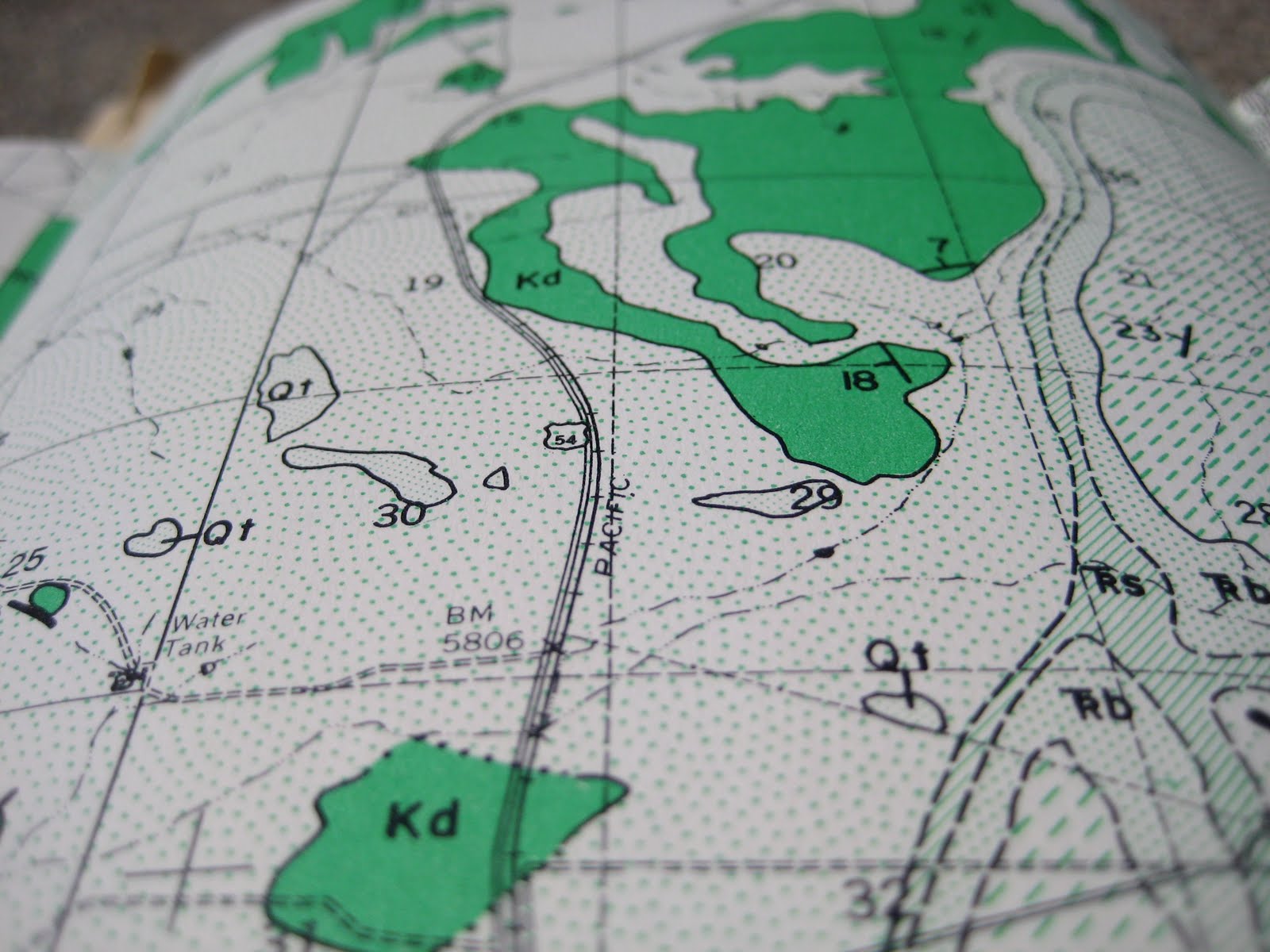
Geology maps: exciting, yeah? I think so. In fact, I know so. I found a treasure trove of geologic maps, circa 1957, at a used bookstore in Spokane. They were all discounted 50%, so no duh, I bought them all. Yup, $7.50 worth of vintage geologic maps from Socorro, New Mexico. Although, I'm not quite sure what I'll do with them (other than study them intently in Manito's Rose Garden), they weren't exactly something I would ever consider passing by. Even if my geologic map reading skills are a tad rusty, they're still gorgeous. Scroll down and take a look-see. 


Pretty, right? So, if you've never looked at a geologic map before, you might be wondering about all the different patterns and colors. Well, they represent the different types of rocks present in the area. Each of the maps comes with a handy key (psssst...look to the right).  


The key is organized according to the order of deposition: generally, oldest rocks on the bottom, newer rocks on the top. Hey, that's an example of the Law of SuperpositionSo when we read this key, we can see that the Dakota formation is older than the Mancos shale. You may also note that between the Mancos shale layer and Agglomerate and Tuft layer, there's something called an Unconformity.


What's an unconformity? Well, it's an indication that the deposition of sediment, sand, silt, mud, etc. (which will eventually become sedimentary rock), was interrupted for a time. You can think of it as a gap in the rock record--sometimes this gap is due to the fact that no new sediments were deposited and sometimes the gap is caused by erosive forces (water or chemicals, wind, glaciers) eating away at the already deposited layers of rock. So, there's a chunk of time which is unrepresented in the record. Eeeeek! Missing time!


See the brackets on the right? Those mark off the geologic time boundaries. Cretaceous is abbreviated K. Hey, you know when the dinosaurs were wiped out? 65 million years ago? That was the end of the Cretaceous! And that boundary is called the K-T boundary because it marks the end of the Cretaceous Period and the beginning of the Tertiary Period (also the end of the Mesozoic Era and the beginning of the Cenozoic Era...which, if you'll recall, we are still in)
Isn't that terrific?! 


I think so. In fact, I know so. 


Wednesday, May 18, 2011

anniversary

Vancouver, Vancouver! This is it! --David Johnstone


That's right. Thirty-one years ago today, at 8:32 AM, Mt. St. Helens erupted. We weren't living in Washington then...actually, I wasn't even born at that point (neither were the sisters). But I'll always remember the audio recording of Johnstone calling the Cascade Volcano Observatory in Vancouver, WA...just like I'll always remember watching the video Dave Crockett took as he hiked away from the erupting St. Helens. We studied the eruption in fourth grade at Elmhurst Elementary. Loved it then, love it now.


St. Helens through the fog


Hummocks

Flora and fauna


For more information on the eruption and its aftermath, here's a USGS video: Mt. St. Helens: May 18, 1980. I assure you, there are many beards. Wait. For even more beards, go here: World Beard and Moustache Championships. Believe me, you won't regret it.


Related Posts Plugin for WordPress, Blogger...